Learn how Simplestream supported Virgin Media Television in launching Virgin Media Play, a next-gen streaming platform. Read the official announcement!
By clicking “Accept All Cookies”, you agree to the storing of cookies on your device to enhance site navigation, analyze site usage, and assist in our marketing efforts. View our Terms & Conditions for more information.
What is OTT Targeting: 5 Strategies to Reach Your Audience?
Category
Blog
Author
Dan Finch
Date
May 10, 2026
Dan Finch
CCO and Co-Founder
Lorem ipsum dolor sit amet, consectetur adipiscing elit. Suspendisse varius enim in eros elementum tristique.
Key Takeaways
OTT targeting lets you reach specific audiences across streaming platforms using data. Unlike traditional TV, you can target by behaviour, location, interests, and devices.
It improves ad performance and reduces wasted spend. You reach viewers more likely to engage, leading to higher completion rates and better ROAS.
There are multiple targeting strategies to combine. These include demographic, geographic, contextual, and retargeting approaches depending on your campaign goals.
Success depends on data and optimisation. A platform like Simplestream helps you track performance and refine targeting.
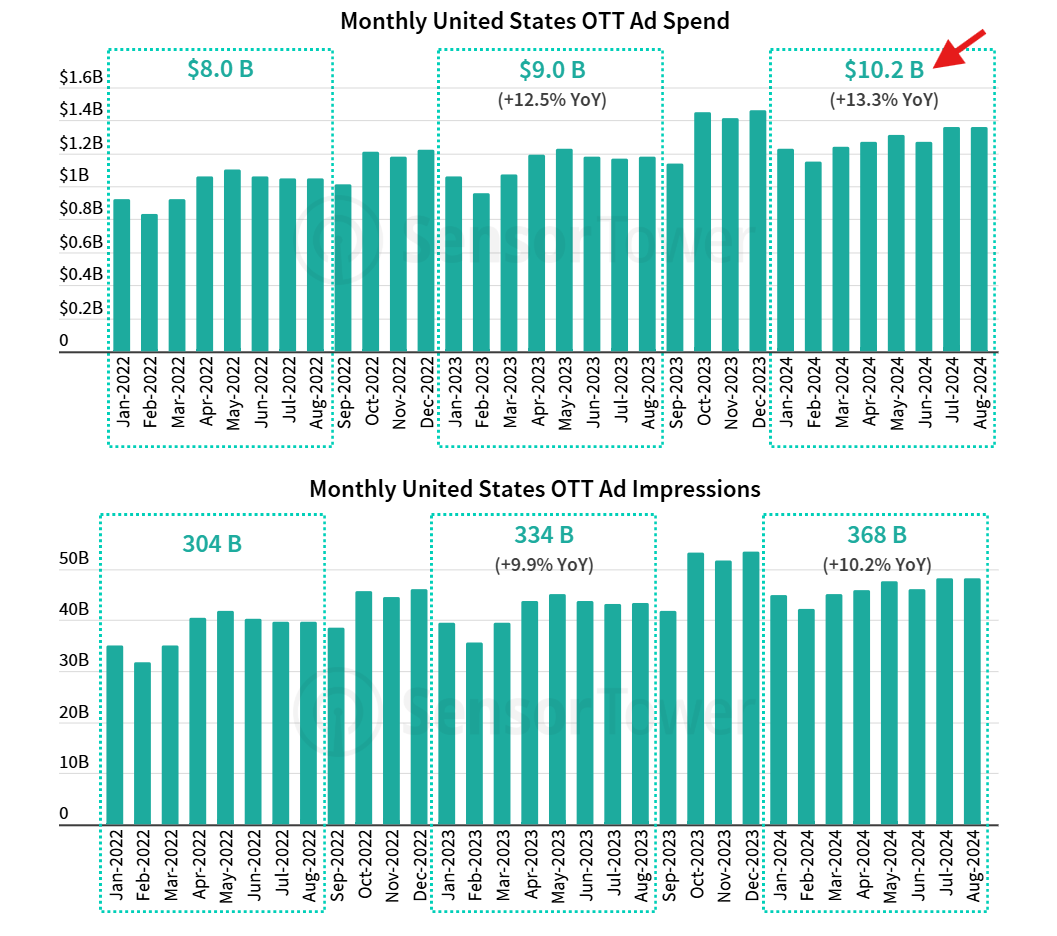
Here’s what modern advertising looks like: Ad-supported streaming now accounts for over 73.6% of TV viewing. As a result, OTT ad spend continues to surge; in the U.S. alone, it surpassed $10B in 2024 and is growing YoY.
But even with the promising figures, results are not assured. Why? Think rising competition and complex, fragmented cross-device viewing. Evan Shapiro (media analyst) summarised it to us on Beyond the Stream:
“Both legacy advertisers and streaming-native brands are still figuring out how to make these models work.”
And that’s why OTT targeting strategies are crucial, especially now.
So, what is OTT targeting, how does it work, and what are the most effective strategies for reaching and converting your audience?
What is OTT Targeting?
OTT targeting is the practice of delivering ads to specific audiences on streaming platforms using data such as behaviour, location, interests, and devices.
Unlike traditional TV, where ads are broadcast to broad audiences, OTT targeting is precision-based. In essence, it helps advertisers reach viewers who are more likely to engage across connected TV environments.
How does OTT targeting work?
It works in two phases.
Phase 1: Audience matching
First, platforms combine multiple data signals to find viewers who fit your criteria:
Audience data: This includes viewers’ demographics, interests, and their behaviour, where they paused, dropped off, etc.
Device data: Data from smartphones, tablets, smart TVs, and other streaming devices
Location data: Geographic targeting down to region or even postcode level
Platform signals: This includes the type of content watched, when, how long, and the app usage
Then, ad tech systems process the signals to build precise audience segments.
Phase 2: Ad delivery and optimisation
Now, automated systems deliver the ads:
Automated bidding: Demand-side platforms (DSPs) bid on impressions that match your audience, based on budget and competition
Targeted delivery: The winning bid serves the ad to the right viewer at the right time
Continuous optimisation: Performance data is tracked and used to refine targeting and improve results
Overall, this means you waste less ad spend resources through control and measurable outcomes.
So, how does OTT targeting compare to traditional TV and CTV?
OTT vs Traditional TV vs CTV targeting at a glance
OTT Targeting
Traditional TV
CTV Targeting
Targeting method
Data-driven, user-level
Broad demographics
Device/household-level
Devices
Mobile, desktop, TV, and other streaming devices
TV only
TV screens only
In short, OTT targeting brings digital precision to video advertising, making ad campaigns more efficient and scalable.
Benefits of OTT targeting
Here are a few ways OTT ads can help your marketing strategy:
More precise audience targeting
You don’t have to guess who might be watching because you have access to viewers’ data. And you can use the data (e.g, viewing habits, interests, device type, and location) to reach viewers who are most relevant to your brand.
This level of precision reduces wasted ad spend and generally improves campaign performance. For example, instead of showing ads to a general TV audience, a SaaS brand can target decision-makers who always watch business content.
Better understanding of ad performance
OTT targeting makes it easier to understand what’s working and what’s not. This helps you gain clear insight into how your campaigns perform.
For example, you’ll get access to detailed metrics like viewer engagement and impressions. This way, you can track how your audience responds to specific ads and make adjustments when necessary.
Better insights also help you link ad performance to outcomes, such as sign-ups. In the end, you’ll make smarter decisions and more efficient use of your budget.
Greater flexibility and control
With OTT ads, you have more control over how and when your ads appear. For instance, you can use the pause ads feature to make static display ads appear when viewers press pause.
This means you won’t have to wait for a fixed schedule since you can leverage OTT features to adjust your campaigns based on your goal or insights.
In short, this flexibility will help you test, understand, and shift to what works best. As a result, you can pause underperforming ads and double down on high-converting ones.
Personalised ad experiences
If viewers see ads that are relevant to them, they’ll likely engage. And thankfully, OTT targeting makes it easier to deliver specific ads to each viewer.
So, instead of showing the same message to everyone, you can tailor ads based on your viewers' interests or buying journey.
This could mean showing different value propositions to new prospects versus returning users. In return, you gain stronger engagement and higher conversion rates.
Expanded reach
OTT targeting helps brands access high-value “cord-cutters.” These are viewers who no longer watch traditional TV. Their primary content viewing is through streaming platforms. This makes them difficult to reach with linear advertising.
The cord-cutters’ distribution.
But you can reconnect with them by advertising on OTT, where they already spend time. Hence, brands can reach modern audiences and younger generations (e.g, Gen X and Gen Z) through OTT ads.
This is especially useful for SaaS companies that are targeting digitally savvy users. They have a higher chance of getting more engagement with their online products.
What are the different OTT targeting strategies?
Depending on your goal, you can combine different strategies for better results.
TL;DR:
Strategy
Benefits
Demographic targeting
Narrows down broad audiences into more relevant segments
Geographic targeting
Useful for local campaigns and ads targeting a specific region
Behavioural targeting
Helps deliver ads based on user activity
Contextual targeting
Aligns messaging with the viewer's mindset and content relevance
Device targeting
Optimises ad delivery for a better viewing experience and performance
Demographic targeting
This strategy focuses on reaching viewers based on age, gender, income, education, or household status. Usually, OTT campaigns start here because it helps define a clear audience profile. Then, other advanced targeting can follow.
While it may seem basic, it’s still very effective when you align your product and messaging. Especially when combined with other data signals. It becomes more precise and, as a result, helps you reach the right audience with less wasted spend.
Geographic targeting
Advertisers use this strategy to reach viewers based on their location, such as country, region, city, or even ZIP code.
So, if your brand is running localised campaigns or operating in specific markets, this is perfect. It lets you tailor your ads to regional needs, their culture, way of life, or market demand.
This strategy can also guide your budgeting by helping you focus on locations that bring more results. This way, your ads will appear where they are most likely to drive engagement and conversions.
Behavioural targeting
Behavioural targeting involves using data on how viewers interact with content. This includes what they watch and how often they watch it. So, instead of relying on assumptions, this approach focuses on genuine user behaviour.
This means you can reach people based on interests and intent signals. For example, you can show ads to people who often watch content relating to your product, as the ads may interest them. This makes the ads more relevant and can turn viewers into leads.
Contextual targeting
Instead of focusing on who the viewer is, contextual targeting focuses on what they are watching at that moment. So, it places ads alongside a specific type of content. This helps align ads with the viewer’s current mindset.
Let’s say you offer marketing tools, you can run ads during business or entrepreneurship content. That way, the message feels more relevant. Also, these ads are less disruptive and more engaging. In the end, it improves the chances that viewers pay attention and take action.
Device targeting
The type of device a viewer uses determines ad format and user experience. Here, advertisers tailor their campaigns to suit how the content is being watched.
For example, short interactive ads may perform better on mobile, while long video ads work well on TV. In short, device targeting helps you optimise ad delivery for a better viewing experience and performance.
What are the Key Factors to Improve OTT Targeting Outcomes?
Short answer: Audience data, segmentation, content optimisation, monitoring, and frequency capping. Below, we explain each.
1. Use high-quality audience data
By high-quality, we mean relevant and up-to-date data. Otherwise, your data becomes outdated or incomplete, leading you to target the wrong audience and waste ad budget.
So, start by combining:
First-party data from your users and subscribers
Third-party signals such as interests and behaviours
Overall, your ideal audience segment will be specific and aligned with your campaign goal. And that will look like this, for example, “sports fans who stream weekly and have engaged with similar content recently.”
2. Segment audiences by intent
Demographics only tell you who your audience is. But you need more. What are they likely to do?
So, instead of targeting broad groups like “18–34,” focus on viewer behaviour and context. This answers the WH questions: What do they watch? When do they watch it? How do they engage?
In the end, you end with something like, “regularly watches fitness content and completes ads.” Such a segment is far more valuable than a general demographic match; they have better engagement and are more likely to convert.
💡 Pro tip: A platform like Simplestream unifies OTT and CTV audience insights. This way, you can segment by viewers’ behaviour and intent, and also track performance in one place.
3. Optimise creatives for each device
OTT audiences don’t watch on the same device. Some are on mobile, while others prefer TV. So, a single ad won’t perform equally across all screens.
To improve results, tailor creatives to the device and viewing context.
Mobile: Use short, attention-grabbing content often with captions
Desktop: Focus on balanced visuals with clear messaging
TV (CTV): High-quality, longer-form ads designed for lean-back viewing are ideal here
When your content matches the experience, viewers are likely to complete ads and have a stronger recall. And they are both good for conversion.
4. Balance reach with frequency
If viewers see your ad too often, ad fatigue might set in. To avoid that, use frequency capping.
It looks like this:
Limit impressions per user per day or week.
Adjust frequency based on campaign goals (awareness vs conversion).
When done right, frequency capping leads to consistent exposure and better recall.
5: Track performance and iterate continuously
Track key metrics like completion rates and conversions to understand what’s working. Then adjust targeting and creatives based on those insights.
For example, if completion rates drop, you can shorten creatives. On the other hand, if the drop was in conversion, you can revisit the frequency or even placement. Either way, you don't have to wait until the end of your campaign cycles to prevent budget waste.
A platform like Simplestream can help here. It provides real-time analytics and a unified dashboard. This way, you can monitor performance and make changes when needed.
Maximise Your OTT Targeting with Simplestream
OTT targeting works best when data and delivery are connected. And the best strategy ties it all together, just as we explained.
But you need a place to monitor and make changes.
Simplestream can help. It lets you launch, track, manage, and optimise campaigns across OTT and CTV without juggling multiple tools.
You get:
Centralised audience insights for better targeting
Built-in monetisation tools to maximise revenue
Real-time analytics to track performance and improve results
Whether you’re refining your targeting strategy as a legacy advertiser or scaling campaigns as a streaming native, Simplestream makes execution easy.
What is OTT Targeting: 5 Strategies to Reach Your Audience?
Key Takeaways
OTT targeting lets you reach specific audiences across streaming platforms using data. Unlike traditional TV, you can target by behaviour, location, interests, and devices.
It improves ad performance and reduces wasted spend. You reach viewers more likely to engage, leading to higher completion rates and better ROAS.
There are multiple targeting strategies to combine. These include demographic, geographic, contextual, and retargeting approaches depending on your campaign goals.
Success depends on data and optimisation. A platform like Simplestream helps you track performance and refine targeting.
Here’s what modern advertising looks like: Ad-supported streaming now accounts for over 73.6% of TV viewing. As a result, OTT ad spend continues to surge; in the U.S. alone, it surpassed $10B in 2024 and is growing YoY.
But even with the promising figures, results are not assured. Why? Think rising competition and complex, fragmented cross-device viewing. Evan Shapiro (media analyst) summarised it to us on Beyond the Stream:
“Both legacy advertisers and streaming-native brands are still figuring out how to make these models work.”
And that’s why OTT targeting strategies are crucial, especially now.
So, what is OTT targeting, how does it work, and what are the most effective strategies for reaching and converting your audience?
What is OTT Targeting?
OTT targeting is the practice of delivering ads to specific audiences on streaming platforms using data such as behaviour, location, interests, and devices.
Unlike traditional TV, where ads are broadcast to broad audiences, OTT targeting is precision-based. In essence, it helps advertisers reach viewers who are more likely to engage across connected TV environments.
How does OTT targeting work?
It works in two phases.
Phase 1: Audience matching
First, platforms combine multiple data signals to find viewers who fit your criteria:
Audience data: This includes viewers’ demographics, interests, and their behaviour, where they paused, dropped off, etc.
Device data: Data from smartphones, tablets, smart TVs, and other streaming devices
Location data: Geographic targeting down to region or even postcode level
Platform signals: This includes the type of content watched, when, how long, and the app usage
Then, ad tech systems process the signals to build precise audience segments.
Phase 2: Ad delivery and optimisation
Now, automated systems deliver the ads:
Automated bidding: Demand-side platforms (DSPs) bid on impressions that match your audience, based on budget and competition
Targeted delivery: The winning bid serves the ad to the right viewer at the right time
Continuous optimisation: Performance data is tracked and used to refine targeting and improve results
Overall, this means you waste less ad spend resources through control and measurable outcomes.
So, how does OTT targeting compare to traditional TV and CTV?
OTT vs Traditional TV vs CTV targeting at a glance
OTT Targeting
Traditional TV
CTV Targeting
Targeting method
Data-driven, user-level
Broad demographics
Device/household-level
Devices
Mobile, desktop, TV, and other streaming devices
TV only
TV screens only
In short, OTT targeting brings digital precision to video advertising, making ad campaigns more efficient and scalable.
Benefits of OTT targeting
Here are a few ways OTT ads can help your marketing strategy:
More precise audience targeting
You don’t have to guess who might be watching because you have access to viewers’ data. And you can use the data (e.g, viewing habits, interests, device type, and location) to reach viewers who are most relevant to your brand.
This level of precision reduces wasted ad spend and generally improves campaign performance. For example, instead of showing ads to a general TV audience, a SaaS brand can target decision-makers who always watch business content.
Better understanding of ad performance
OTT targeting makes it easier to understand what’s working and what’s not. This helps you gain clear insight into how your campaigns perform.
For example, you’ll get access to detailed metrics like viewer engagement and impressions. This way, you can track how your audience responds to specific ads and make adjustments when necessary.
Better insights also help you link ad performance to outcomes, such as sign-ups. In the end, you’ll make smarter decisions and more efficient use of your budget.
Greater flexibility and control
With OTT ads, you have more control over how and when your ads appear. For instance, you can use the pause ads feature to make static display ads appear when viewers press pause.
This means you won’t have to wait for a fixed schedule since you can leverage OTT features to adjust your campaigns based on your goal or insights.
In short, this flexibility will help you test, understand, and shift to what works best. As a result, you can pause underperforming ads and double down on high-converting ones.
Personalised ad experiences
If viewers see ads that are relevant to them, they’ll likely engage. And thankfully, OTT targeting makes it easier to deliver specific ads to each viewer.
So, instead of showing the same message to everyone, you can tailor ads based on your viewers' interests or buying journey.
This could mean showing different value propositions to new prospects versus returning users. In return, you gain stronger engagement and higher conversion rates.
Expanded reach
OTT targeting helps brands access high-value “cord-cutters.” These are viewers who no longer watch traditional TV. Their primary content viewing is through streaming platforms. This makes them difficult to reach with linear advertising.
The cord-cutters’ distribution.
But you can reconnect with them by advertising on OTT, where they already spend time. Hence, brands can reach modern audiences and younger generations (e.g, Gen X and Gen Z) through OTT ads.
This is especially useful for SaaS companies that are targeting digitally savvy users. They have a higher chance of getting more engagement with their online products.
What are the different OTT targeting strategies?
Depending on your goal, you can combine different strategies for better results.
TL;DR:
Strategy
Benefits
Demographic targeting
Narrows down broad audiences into more relevant segments
Geographic targeting
Useful for local campaigns and ads targeting a specific region
Behavioural targeting
Helps deliver ads based on user activity
Contextual targeting
Aligns messaging with the viewer's mindset and content relevance
Device targeting
Optimises ad delivery for a better viewing experience and performance
Demographic targeting
This strategy focuses on reaching viewers based on age, gender, income, education, or household status. Usually, OTT campaigns start here because it helps define a clear audience profile. Then, other advanced targeting can follow.
While it may seem basic, it’s still very effective when you align your product and messaging. Especially when combined with other data signals. It becomes more precise and, as a result, helps you reach the right audience with less wasted spend.
Geographic targeting
Advertisers use this strategy to reach viewers based on their location, such as country, region, city, or even ZIP code.
So, if your brand is running localised campaigns or operating in specific markets, this is perfect. It lets you tailor your ads to regional needs, their culture, way of life, or market demand.
This strategy can also guide your budgeting by helping you focus on locations that bring more results. This way, your ads will appear where they are most likely to drive engagement and conversions.
Behavioural targeting
Behavioural targeting involves using data on how viewers interact with content. This includes what they watch and how often they watch it. So, instead of relying on assumptions, this approach focuses on genuine user behaviour.
This means you can reach people based on interests and intent signals. For example, you can show ads to people who often watch content relating to your product, as the ads may interest them. This makes the ads more relevant and can turn viewers into leads.
Contextual targeting
Instead of focusing on who the viewer is, contextual targeting focuses on what they are watching at that moment. So, it places ads alongside a specific type of content. This helps align ads with the viewer’s current mindset.
Let’s say you offer marketing tools, you can run ads during business or entrepreneurship content. That way, the message feels more relevant. Also, these ads are less disruptive and more engaging. In the end, it improves the chances that viewers pay attention and take action.
Device targeting
The type of device a viewer uses determines ad format and user experience. Here, advertisers tailor their campaigns to suit how the content is being watched.
For example, short interactive ads may perform better on mobile, while long video ads work well on TV. In short, device targeting helps you optimise ad delivery for a better viewing experience and performance.
What are the Key Factors to Improve OTT Targeting Outcomes?
Short answer: Audience data, segmentation, content optimisation, monitoring, and frequency capping. Below, we explain each.
1. Use high-quality audience data
By high-quality, we mean relevant and up-to-date data. Otherwise, your data becomes outdated or incomplete, leading you to target the wrong audience and waste ad budget.
So, start by combining:
First-party data from your users and subscribers
Third-party signals such as interests and behaviours
Overall, your ideal audience segment will be specific and aligned with your campaign goal. And that will look like this, for example, “sports fans who stream weekly and have engaged with similar content recently.”
2. Segment audiences by intent
Demographics only tell you who your audience is. But you need more. What are they likely to do?
So, instead of targeting broad groups like “18–34,” focus on viewer behaviour and context. This answers the WH questions: What do they watch? When do they watch it? How do they engage?
In the end, you end with something like, “regularly watches fitness content and completes ads.” Such a segment is far more valuable than a general demographic match; they have better engagement and are more likely to convert.
💡 Pro tip: A platform like Simplestream unifies OTT and CTV audience insights. This way, you can segment by viewers’ behaviour and intent, and also track performance in one place.
3. Optimise creatives for each device
OTT audiences don’t watch on the same device. Some are on mobile, while others prefer TV. So, a single ad won’t perform equally across all screens.
To improve results, tailor creatives to the device and viewing context.
Mobile: Use short, attention-grabbing content often with captions
Desktop: Focus on balanced visuals with clear messaging
TV (CTV): High-quality, longer-form ads designed for lean-back viewing are ideal here
When your content matches the experience, viewers are likely to complete ads and have a stronger recall. And they are both good for conversion.
4. Balance reach with frequency
If viewers see your ad too often, ad fatigue might set in. To avoid that, use frequency capping.
It looks like this:
Limit impressions per user per day or week.
Adjust frequency based on campaign goals (awareness vs conversion).
When done right, frequency capping leads to consistent exposure and better recall.
5: Track performance and iterate continuously
Track key metrics like completion rates and conversions to understand what’s working. Then adjust targeting and creatives based on those insights.
For example, if completion rates drop, you can shorten creatives. On the other hand, if the drop was in conversion, you can revisit the frequency or even placement. Either way, you don't have to wait until the end of your campaign cycles to prevent budget waste.
A platform like Simplestream can help here. It provides real-time analytics and a unified dashboard. This way, you can monitor performance and make changes when needed.
Maximise Your OTT Targeting with Simplestream
OTT targeting works best when data and delivery are connected. And the best strategy ties it all together, just as we explained.
But you need a place to monitor and make changes.
Simplestream can help. It lets you launch, track, manage, and optimise campaigns across OTT and CTV without juggling multiple tools.
You get:
Centralised audience insights for better targeting
Built-in monetisation tools to maximise revenue
Real-time analytics to track performance and improve results
Whether you’re refining your targeting strategy as a legacy advertiser or scaling campaigns as a streaming native, Simplestream makes execution easy.